

Lighting Planning for Modern Homes: The Complete Checklist Before Interior Work

Planning lighting before interior work begins helps create a home that is functional, comfortable, flexible, and visually cohesive. This checklist covers room-specific lighting, furniture placement, layered lighting, colour temperature, smart controls, lighting performance, and future-ready planning to help homeowners avoid costly changes and create better-lit spaces.
Most lighting mistakes don’t happen when you buy the lights. They happen months before.
By the time lights are installed, your ceiling design is complete, wiring is concealed, and furniture layouts are fixed. At that stage, changing even one lighting point can mean extra cost, additional labour, and unnecessary compromises.
That’s why the best lighting decisions are made before interior work begins.
Whether you’re building a new home or renovating an existing one, this checklist will help you plan lighting that works beautifully, not just on the day of installation, but for years to come.
Lighting for Every Room
Before selecting any light, ask yourself one simple question: How will this room be used?
Every space has a different purpose, and its lighting should reflect that. A bedroom needs a calm, relaxing atmosphere, while a kitchen requires clear visibility for everyday tasks. A living room may need to transition between entertaining guests, family time, and quiet evenings.
When lighting is planned around the purpose of a room rather than just its appearance, the result feels natural, comfortable, and functional.
Plan Lighting Around Furniture
One of the most common mistakes is planning lights before finalising the furniture layout.
The placement of your bed, dining table, sofa, study desk, kitchen island, or artwork directly influences where light is actually required. If lighting points are decided too early, they may end up illuminating empty spaces instead of the areas you use every day.
Good lighting complements the way you live, not just the floor plan.
The Importance of Layered Lighting
A single ceiling light rarely creates a well-lit space.
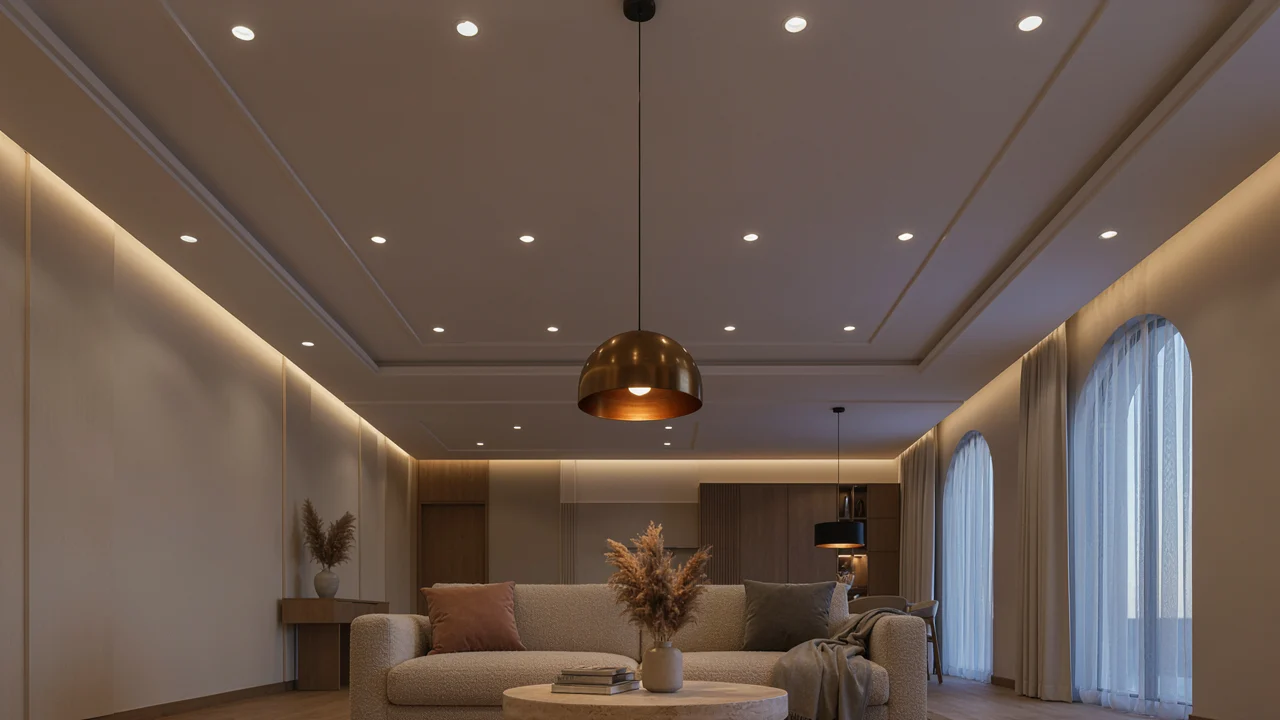
Modern interiors rely on layered lighting, where ambient lighting provides overall illumination, task lighting supports activities like reading or cooking, and accent lighting highlights architectural details or décor.
This combination creates depth, improves functionality, and allows a space to feel balanced throughout the day.
Well-designed lighting isn’t brighter, it is simply better planned.
Choosing the Right Colour Temperature
The colour of light can completely change the mood of a room.
Warmer colour temperatures create a welcoming and relaxing environment, making them ideal for bedrooms and living spaces. Neutral tones work well in dining areas, while cooler temperatures improve clarity in kitchens, study areas, and workspaces.
Selecting the appropriate colour temperature during the planning stage ensures that every room feels exactly as it is intended to.
Flexible Lighting for Modern Living
Homes today are more dynamic than ever.
The same room may function as a workspace during the day, a family area in the evening, and a place to relax at night. Lighting should be able to adapt just as easily.
Planning for dimming, tunable lighting, and customised lighting scenes from the beginning gives you the flexibility to create different moods without changing the lighting layout in the future.
Lighting Performance Matters
Beautiful lighting is about much more than appearance.
Factors such as glare control, colour rendering index (CRI), beam angle, lumen output, and flicker-free performance all influence how comfortable and effective a space feels. While
these specifications are often overlooked, they play a significant role in determining the overall lighting experience.
The quality of light is just as important as the design of the fixture.
Smart Lighting Controls
Lighting isn’t only about where the lights are placed, it’s also about how you control them.
Planning for remotes, scene controllers, app-based controls, voice control, or dimming
systems before electrical work begins makes installation cleaner and everyday use much more convenient.
The best lighting systems feel effortless because they are designed around the way people actually live.
Think Beyond Individual Lights
Instead of choosing lights one by one, think of your lighting as a complete system.
When colour temperatures, beam angles, controls, and overall design work together, the
entire home feels more cohesive. It also makes future upgrades and expansions much easier. A well-planned lighting system creates consistency that individual products simply cannot.
Why Lighting Planning Matters
Interior finishes can always be updated.
Electrical planning is far more difficult to change once construction is complete.
Taking the time to plan your lighting before interior work begins helps avoid costly modifications, improves everyday comfort, and ensures your home performs just as beautifully as it looks.
The difference between a well-lit home and a beautifully lit home isn’t the number of lights. It’s the quality of the planning behind them.
The Litomatic Perspective
At Litomatic, we believe exceptional lighting begins long before the lights are switched on. It starts with thoughtful planning, informed decisions, and solutions that work in harmony with both architecture and everyday living.
Because great lighting isn’t an addition to your interiors. It’s the foundation that brings them to life.